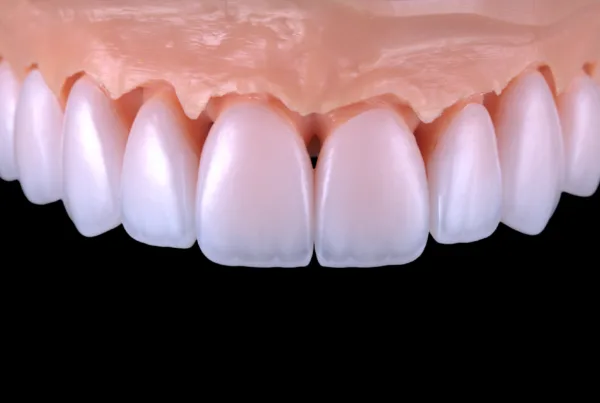
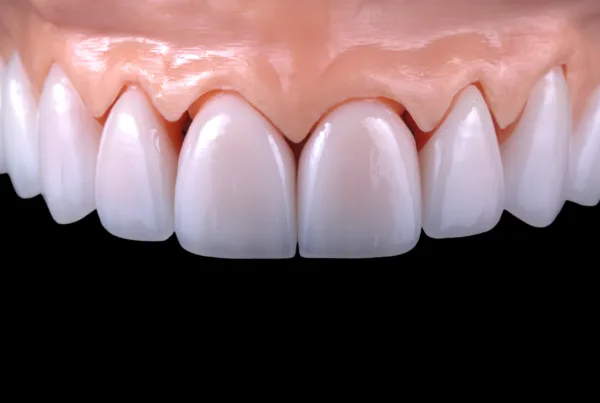
Real smiles. Exceptional artistry. Explore a collection of our most refined transformations.
Every restoration in this gallery starts here, at the ceramics bench, by hand and case by case.
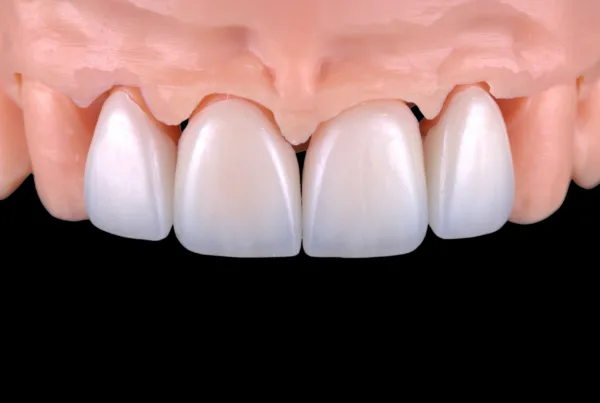
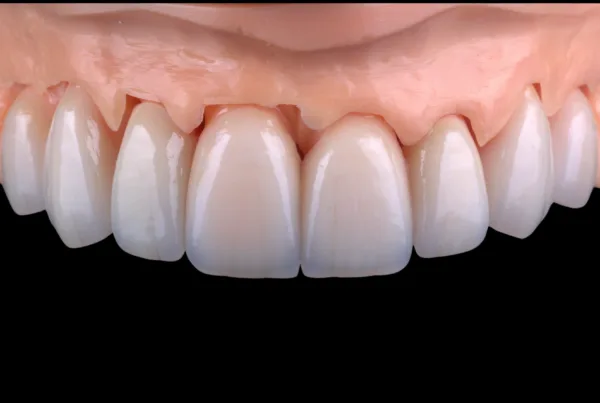
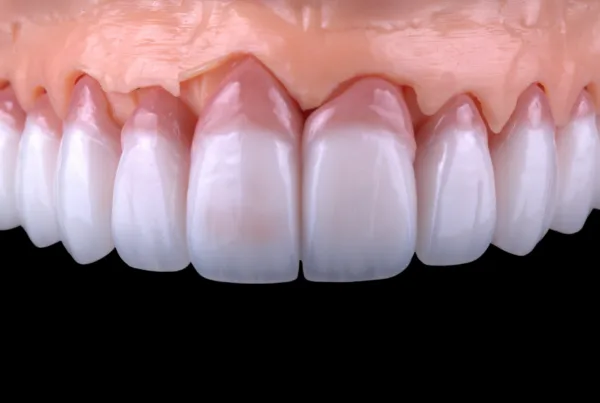
Four anterior veneers, A1 with low translucency, that go past simple brightness.
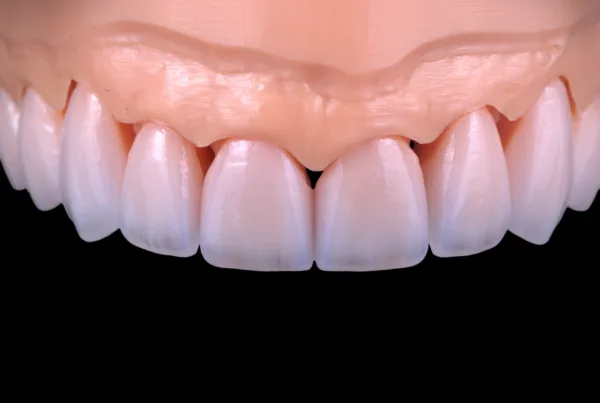
Fine, darker striations run vertically through the incisal zone of this feldspathic set.
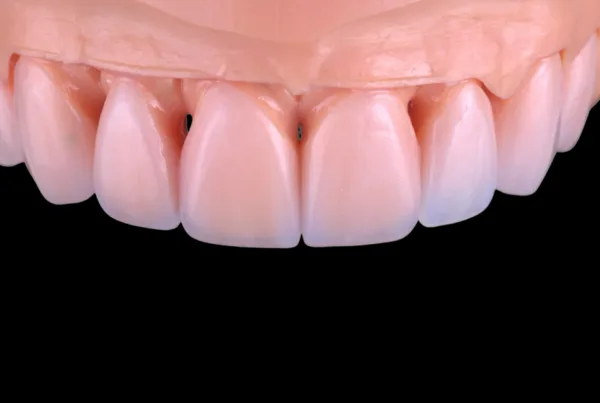
Cool, grey-white facial surfaces set against saturated orange.
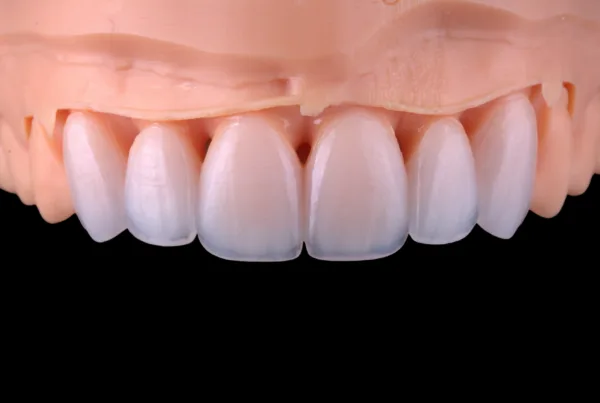
A bright anterior set in medium translucency, where contour does most of the work.
The eye goes to the incisal third, where a cool blue-gray opalescence sits over a bright.
In A2 and low translucency, a warmer ivory body carries pronounced facial texture.
Warmth gathers at the cervical and clears toward the incisal edge.
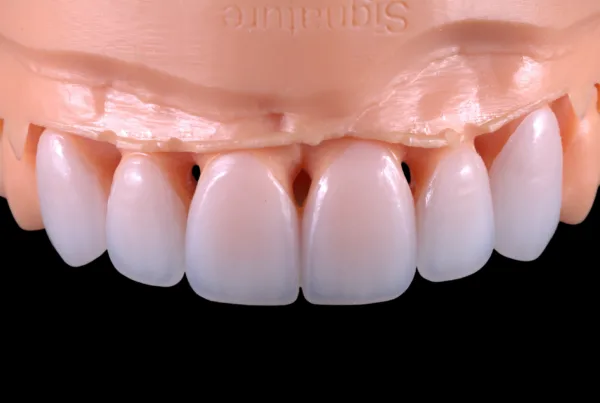
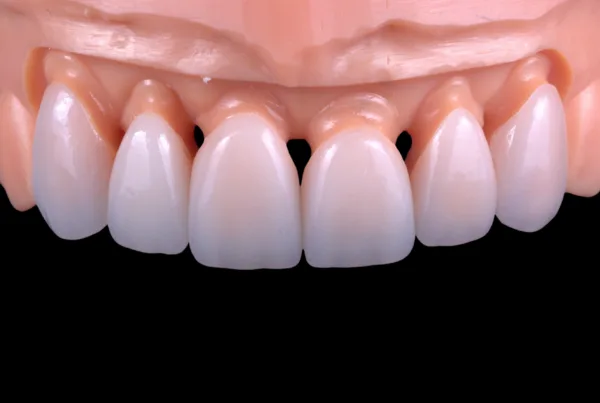
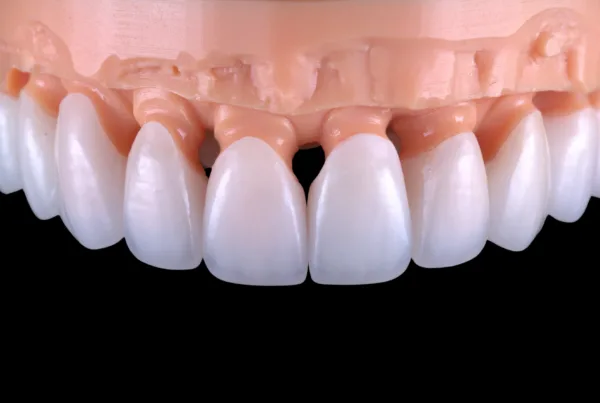
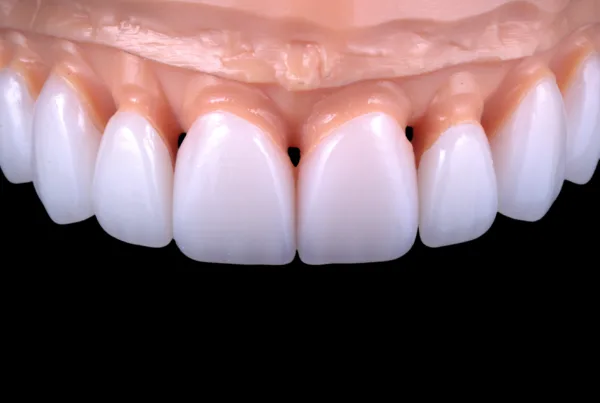
Each unit has its own cervical outline on the model, tied together by warmer cervical tones.
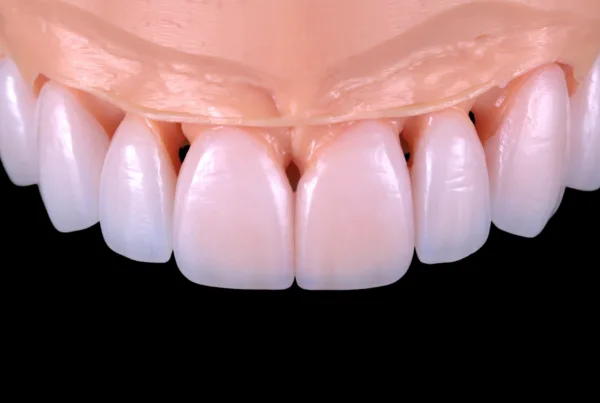
Facial lobes break up the highlights across the broad centrals, so the surface reads as relief.
Warmth holds through the body, and the cooler detail gathers toward the edge.
Bright white, smooth surfaces with clean highlights, laid in a shallow arc between kiwi halves.
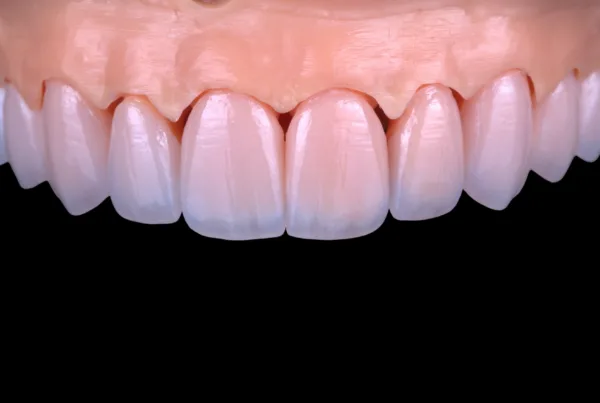
A bright body with clear vertical definition, the facial highlights running from the cervical transition.
The incisal finish is the point: a narrow, lighter rim beside a blue-gray band.
Light travels down the facial surface and breaks into long vertical highlights over a fine surface.
Broad, square-ovoid centrals set the proportions, and the laterals supply the contrast.
Width and convexity lead here. Broad central faces with rounded corners carry long facial.
Pronounced vertical ridges run down each unit, echoing the ribbing of the shells around them.
Mamelon-like lobes stay distinct within the cooler incisal zone, easy to miss at first glance.
The width changes gently from the cervical area to the incisal edge, and that taper defines the case.